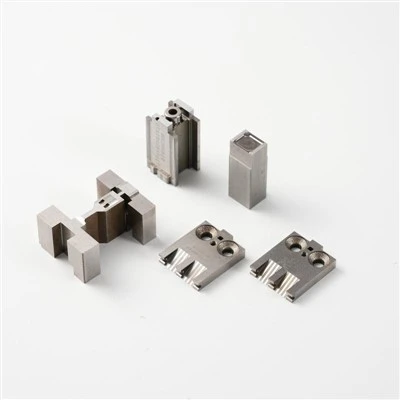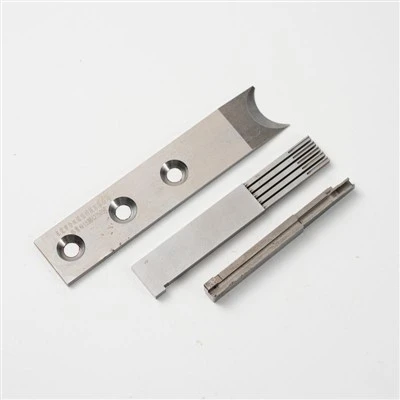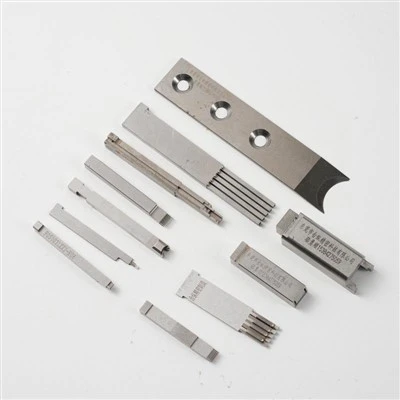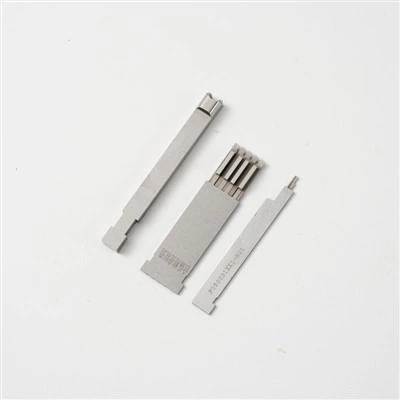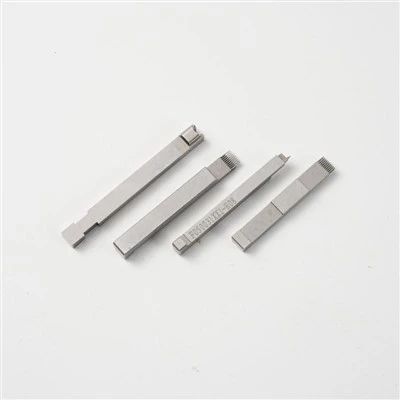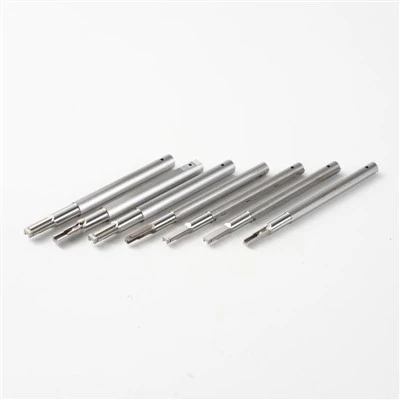
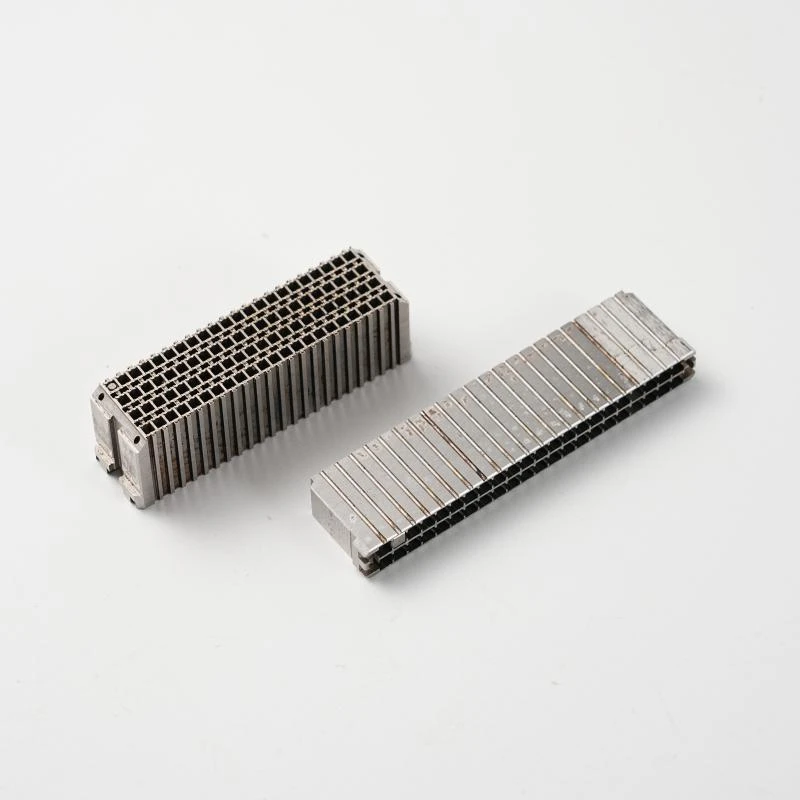


What Is Precision Die Stamping?
Precision die stamping is a cold-forming manufacturing process that uses custom-engineered dies and high-speed presses to transform flat sheet metal or coil stock into complex, tight-tolerance components. Unlike conventional stamping, this process employs advanced tooling with micron-level clearances, hardened guide systems, and feed controls to achieve dimensional accuracies as tight as ±0.01 mm or better. The process can be performed as a single-step operation or through progressive dies-where the metal strip advances through a series of stations, each performing a sequential cutting, bending, coining, or forming operation until the finished part is completed. Progressive die stamping is particularly valuable for high-volume production, with modern presses capable of running at speeds up to 1,600 strokes per minute while maintaining exceptional repeatability.
Why Choose Precision Die Stamping?
For engineers and procurement professionals sourcing metal components, precision die stamping delivers five distinct advantages that alternative manufacturing methods cannot match:
Uncompromising Accuracy – Advanced die design, CNC-controlled press systems, and precision feeding mechanisms enable consistent production of parts with sub-micron tolerances and superior surface finishes. Critical features such as hole positions, bend angles, and edge profiles remain within specification across millions of production cycles.
High-Speed Throughput – Once the die is installed, automated press operations run with minimal operator intervention. High-speed progressive stamping produces finished parts at hundreds or even thousands of strokes per minute, dramatically reducing lead times compared to CNC machining or laser cutting.
Cost Efficiency at Scale – With fast production cycles, low labor requirements, and minimal material waste, precision die stamping offers exceptional per-part economics for medium to high volume runs. The precision of the process also reduces or eliminates the need for secondary finishing operations.
Design Flexibility – Progressive dies can incorporate multiple operations-blanking, piercing, bending, coining, embossing, drawing, and tapping-within a single tool, enabling the production of highly complex geometries in one continuous process.
Application Versatility – From automotive engine mounts and sensor housings to medical surgical instruments, electronic connectors, and aerospace fastening systems, precision die stamping serves industries where component reliability and dimensional integrity are non-negotiable.
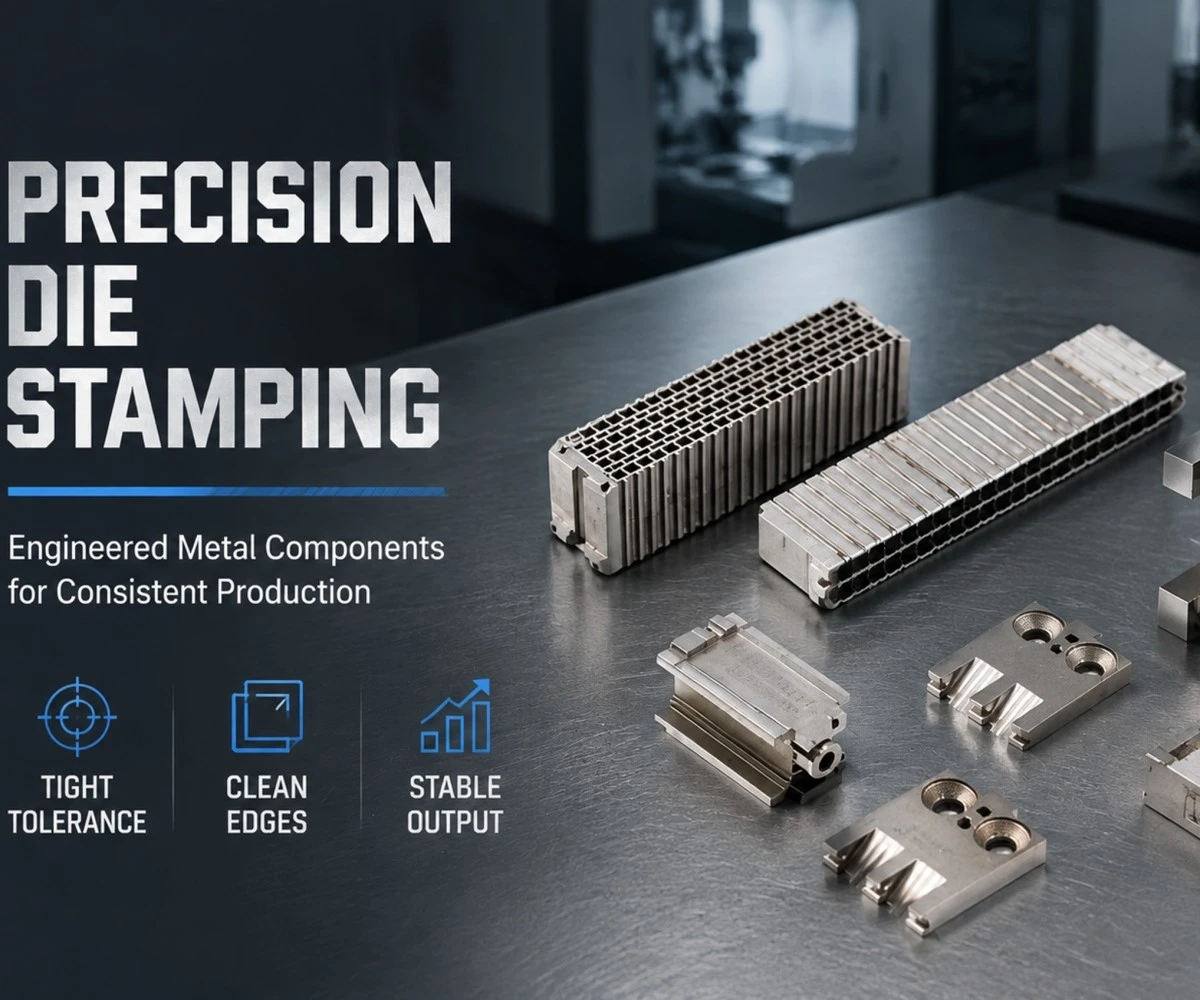
Industries & Applications Served
Our precision die stamping capabilities support components for automotive (brackets, terminals, shielding housings), medical devices (surgical instrument parts, implantable device components), electronics (connectors, lead frames, EMI shields), and industrial equipment. We work with a wide range of materials including stainless steel, copper alloys, aluminum, brass, and specialty metals.
Frequently Asked Questions
Q: What tolerances can precision die stamping achieve?
A: Typical precision stamping holds ±0.01 mm to ±0.025 mm, while ultra-precision fine blanking can reach ±0.002 mm to ±0.01 mm. The achievable tolerance depends on material grade, thickness, part geometry, and die design.
Q: What is the difference between progressive die stamping and transfer die stamping?
A: Progressive die stamping feeds a continuous metal strip through sequential stations within a single die set-ideal for high-volume, small-to-medium parts. Transfer die stamping moves individual workpieces from station to station via a mechanical transfer system, better suited for larger or deeper-formed parts.
Q: What materials can be processed?
A: We process a broad spectrum of metals including cold-rolled steel, stainless steel, copper, brass, phosphor bronze, aluminum, and specialty alloys like Kovar. Material thickness typically ranges from 0.003″ to 0.250″ depending on the application.
Q: How do I get started with a custom precision stamping project?
A: Contact us with your part drawings, material specifications, tolerance requirements, and estimated annual volume. Our engineering team will evaluate design-for-manufacturability, develop a die proposal, and provide a competitive quotation with lead time estimates
Hot Tags: precision die stamping, China precision die stamping manufacturers, suppliers, factory